
The Church’s Classification of Sea People
The Moon and the SunThis thread traces religious authorities’ shifting labels for sea people and their use of doctrine to justify possession, conversion, and historical erasure.
increasing Bearing strength in each event
 decreasing
Bearing strength in each eventdecreasingDemons in Old Accounts

A Dangerous Name
Inherited doctrine
Earlier accounts cast sea people as demons, and the Church’s past judgments have treated them as threats rather than neighbors.
Consequences
Those labels enabled persecution and capture. The old classification remains politically useful even after observation begins to challenge it.
The Naturalist’s Argument

Beast or Person
Anatomy
Yves identifies mammalian features and argues that the sea monster is a natural creature. His conclusion rejects demonic explanations, but still places the captive among animals.
Limits of the category
The scientific correction does not grant the sea people agency or rights. Their humanity remains outside the categories the court is prepared to honor.
A Pope Demands Conversion

Salvation as Control
Papal intervention
Pope Innocent claims Sherzad may be a demon or a pagan creature requiring exorcism and conversion. His concern for her soul remains bound to his authority over her.
Resistance
Marie-Josèphe insists that Sherzad is a woman and a person. The dispute exposes the violence hidden within seemingly benevolent religious categories.
Admitted Humanity

A Changed Ruling
Recognition
Pope Innocent acknowledges that the sea people are people, a concession that challenges the Church’s prior account of them as beasts or demons.
Institutional duty
He assigns Yves the work of correcting the record. The admission matters, but it does not undo earlier violence or restore those already killed.
The Erasure Order
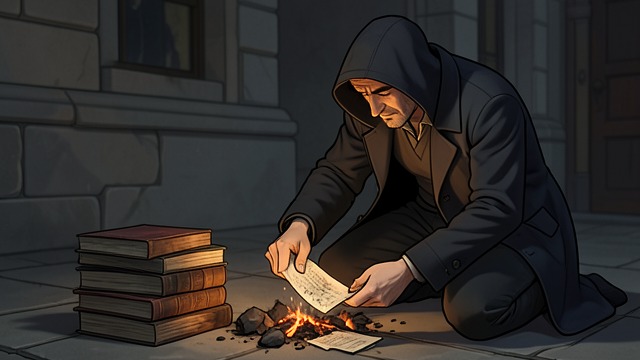
Memory Under Command
Destruction ordered
Pope Innocent commands the removal of books, letters, paintings, and chronicles mentioning sea people. Yves is ordered to erase their presence from public conscience.
Secret resistance
The official record is burned, but Yves secretly preserves evidence. The conflict shifts from physical captivity to control over collective memory.
Before Yves’s expedition, as described in court debates
The first dissection at Versailles
The audience after Marie-Josèphe’s sea-person testimony
The final council after the voyage
The judgment in Louis XIV’s council room
